 English
 中文简体
中文简体 Español
 عربى
عربىBedding Fabric Guide: Cotton, Polyester, and Blended Options for Buyers
Inicio / Noticias / Noticias de la Industria / Bedding Fabric Guide: Cotton, Polyester, and Blended Options for Buyers

Proveedores de telas de algodón: una guía práctica de abastecimiento para compradores de textiles para el hogar
Oct 19,2026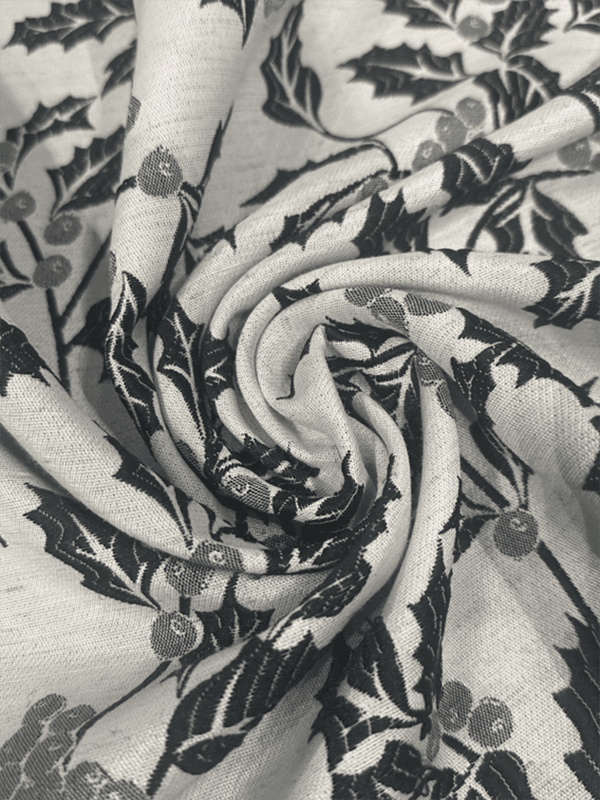
Guía de telas para cortinas: elección del material, tejido y cortina adecuados para ventanas
Oct 13,2026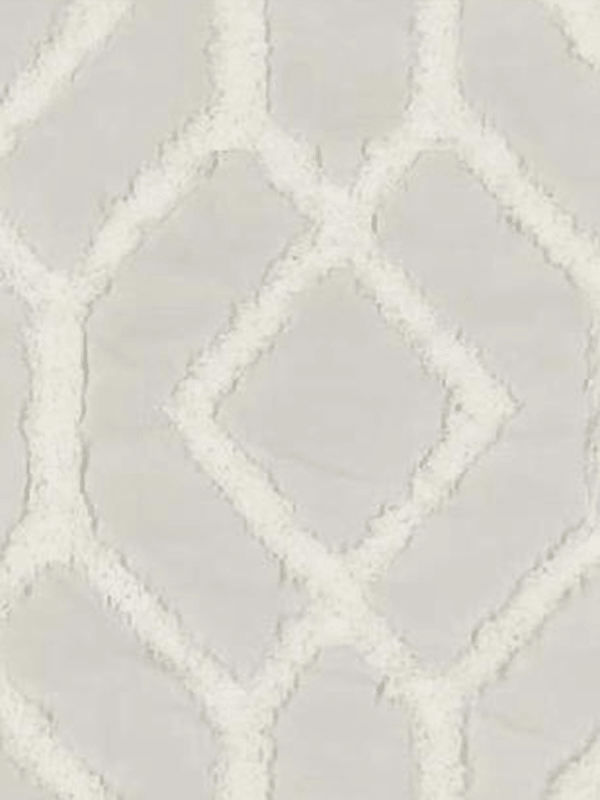
Guía de telas de algodón: tipos, tejidos y cómo conseguirlos correctamente para B2B
Oct 08,2026Contenido
When a bedding brand plans a new collection, the first question is rarely about thread count. It is about the fabric itself. The fiber composition of bedding fabric determines how a duvet cover or sheet set feels against the skin, how it survives repeated laundering, and what it costs at scale. For buyers and product developers, the choice usually narrows to three families: 100% cotton, 100% polyester, and polyester-cotton blends. Each serves a different market position, and knowing the differences before you source prevents costly mistakes later.
Bedding fabric is not simply about softness. Composition drives performance parameters such as breathability, moisture absorption, dimensional stability, pilling resistance, and longevity. It also drives the price per meter, which directly affects your product margin. A 100% cotton fabric offers a classic, breathable hand feel but usually costs more per meter. A 100% polyester fabric can be engineered into a wide range of textures at a lower price. A blend tries to take the best of both worlds.
The table below summarizes how the three main bedding fabric families compare in everyday performance.
| Property | 100% Cotton | 100% Polyester | Polyester-Cotton Blend |
|---|---|---|---|
| Breathability | High | Moderate | Good |
| Moisture absorption | High | Low | Moderate |
| Wrinkle resistance | Low to moderate | High | Moderate to high |
| Durability | Good | High | High |
| Softness over time | Softens with wash | Consistent | Balanced |
| Price per meter | Higher | Lower | Mid |
This is the short version: cotton gives you breathability and a natural market position; polyester gives you durability and cost control; blends give you a workable middle ground. Choose based on your target customer and retail price point, not the other way around.
Cotton remains the default choice for brands that want to sell a natural, breathable product. It absorbs moisture well, feels comfortable next to the skin, and becomes softer after repeated washing. High-quality cotton bedding fabric is also versatile in construction: it can be woven in plain weave for a crisp percale hand, in satin weave for a smoother sateen touch, or as a jacquard for raised patterns.
What matters most when sourcing cotton is the grade of the raw fiber. Longer staple cotton produces a stronger, finer yarn, which translates into a smoother and more durable fabric. Shorter fibers can create a surface that is more prone to pilling and less comfortable over time. When evaluating options, ask the supplier about yarn count, weaving density, and whether the cotton is combed or carded. These details affect both the hand feel and the price per meter.
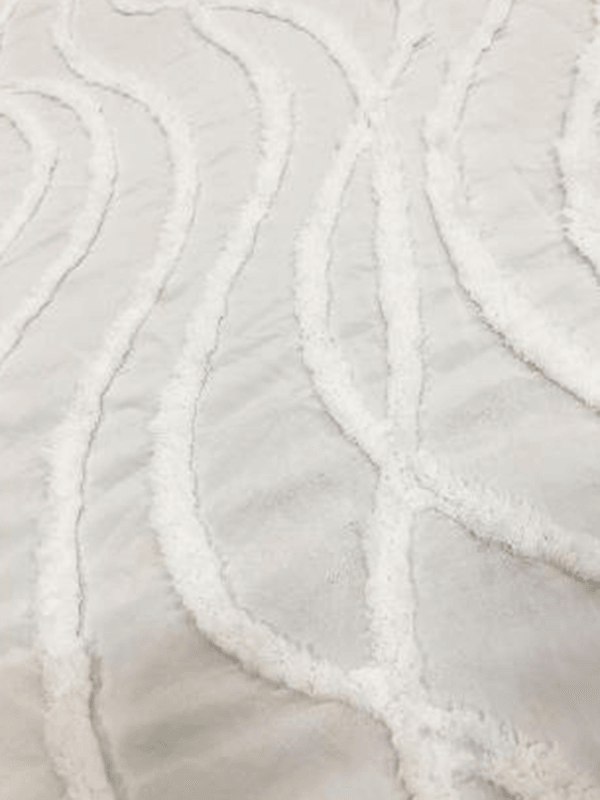
Cotton also responds well to structural interest. Textured weaves such as waffle, corrugated, or irregular interlocking patterns give a plain fabric a three-dimensional surface without adding synthetic fibers. This is a practical route for brands that want to differentiate on texture rather than relying on printed designs alone.
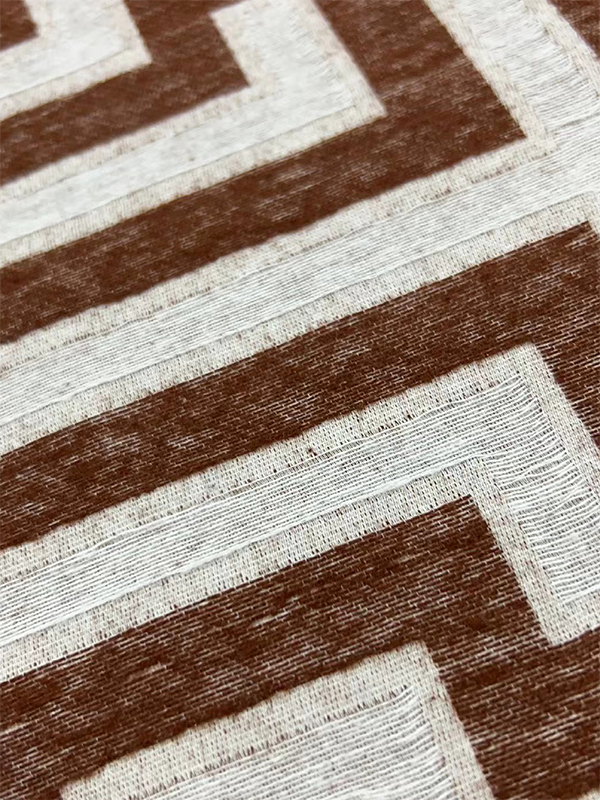
 Cotton Woven Fabric with Checkered Corrugated Bracket Pattern This cotton fabric features a three-dimensional wave-like pattern woven with white and yellow interlocking squares. Its textured corrugated structure offers visual depth, making it a suitable choice for bedding brands seeking surface interest without synthetic fibers. View Product →
 Polyester has moved far beyond the slippery, uncomfortable sheets of past decades. Modern polyester bedding fabric is engineered with a wide range of surface effects: wrinkled crepe finishes, waffle grids, chenille plush, sand-washed textures, and dog-hair style cuts. This makes it an attractive option for brands that sell fashion-forward bedding at a mass-market price point.
From a performance standpoint, polyester holds color well, resists shrinking and stretching, and requires minimal ironing. It is also more resistant to abrasion than most natural fibers, which is why it performs well in products that are washed frequently, including bedding sets and blanket series. The main trade-off is lower breathability and lower moisture absorption compared with cotton, although specific weaves and finishes can improve air circulation.
For sourcing, 100% polyester bedding fabric offers a controlled supply chain. Because the raw material is synthetic, quality parameters such as yarn fineness, dye consistency, and finish uniformity are easier to standardize than with natural fibers. Factories can develop custom textures by passing the fabric through different finishing routes, such as sand-washing, brushing, pleating, or coating, without the risk of damaging delicate natural fibers.
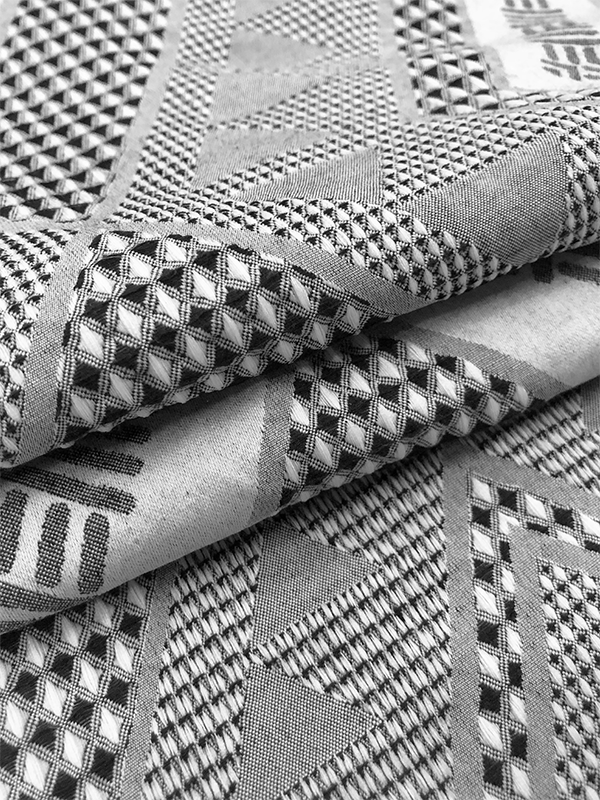
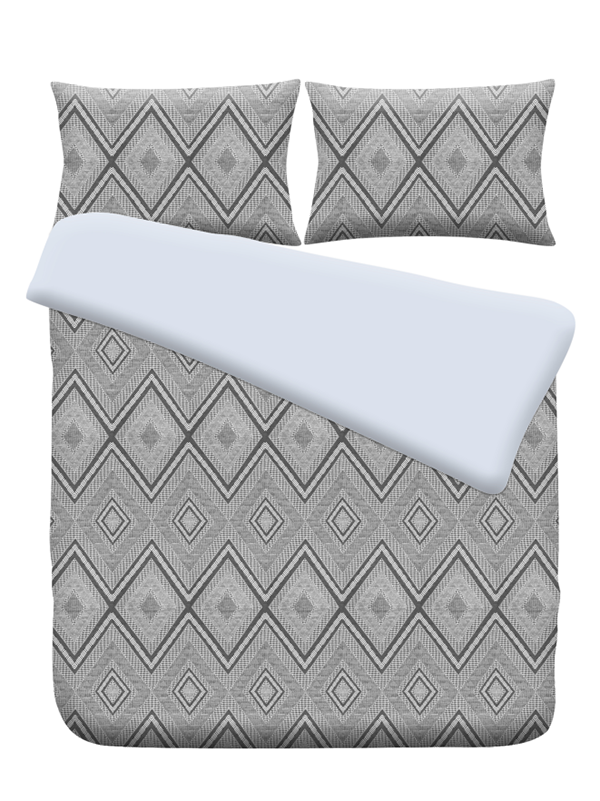 Black and White Diamond Waffle Polyester Bedding Fabric A 100% polyester waffle weave with a classic black-and-white diamond grid. Designed for bedding, it emphasizes softness, breathability, and colorfastness. The stated OEKO-TEX certification supports safe use, while the diamond pattern adds a relaxed, fashionable look to bedrooms. View Product →
 Blended bedding fabric is designed to balance cost, comfort, and durability. A common blend ratio is 65% polyester and 35% cotton, or a 50/50 split. The polyester component adds strength, dimensional stability, and wrinkle resistance; the cotton component adds absorbency and a natural hand feel. The result is a fabric that behaves predictably in production and in daily use.
Blends also give buyers more flexibility with texture and appearance. Because polyester takes dye differently from cotton, a blend can produce subtle heather effects or contrast tones. Some blend fabrics are constructed with loops, tufts, or chenille yarns to create a plush surface for bedding and throw applications. For buyers who want the hand of cotton without paying a full-cotton price, blended bedding fabric is often the practical answer.
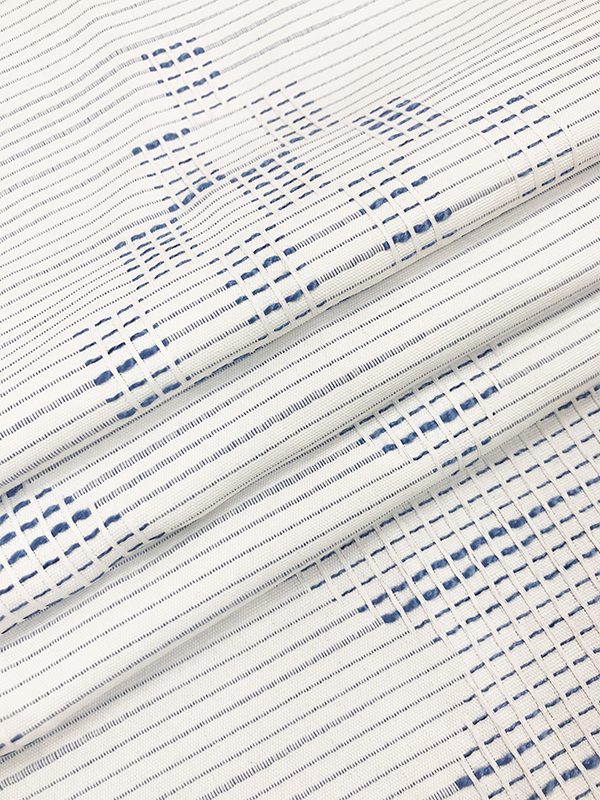
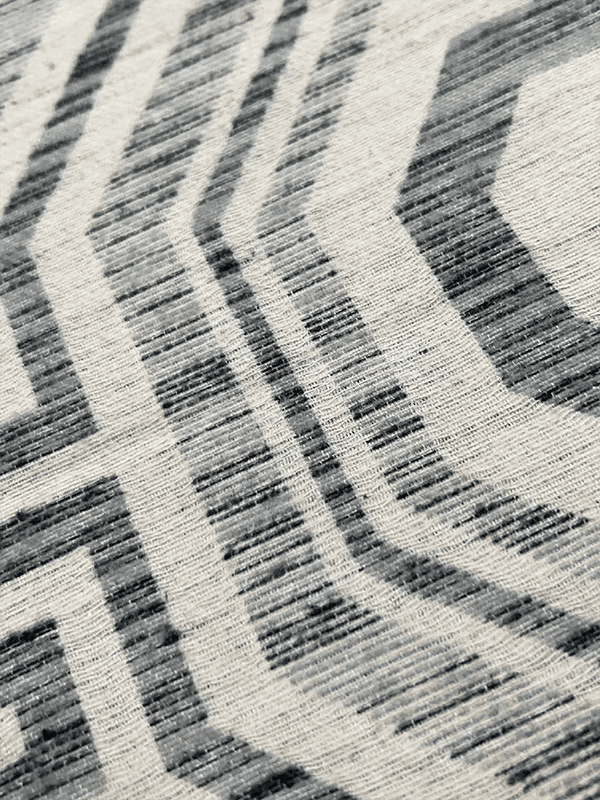
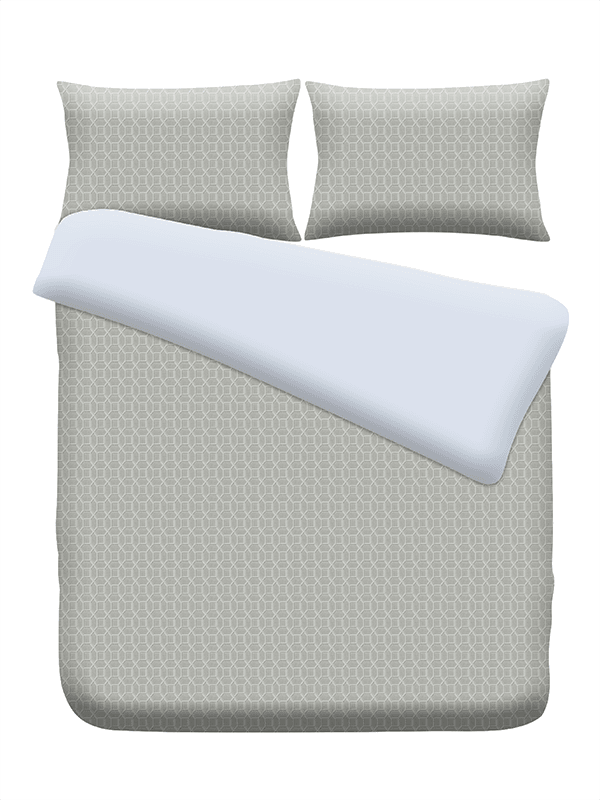 Copper Coin Pattern Polyester-Cotton Bedding Fabric This 40% polyester, 60% cotton fabric uses hexagonal and square shapes to create a copper coin-like effect. The gray-and-white base keeps it fresh, while the structured weave adds dimension. Its blend offers stability and wrinkle resistance, suitable for modern bedding and living spaces. View Product →
 Once the composition is decided, the weave and finish take over. The same 100% polyester yarn can become a crisp waffle fabric, a flowing crepe, a plush chenille, or a high-low jacquard, depending on how it is woven and finished. This is where a fabric manufacturer's production flexibility matters most.
Common weave constructions for bedding fabric include:
Finishes are equally important. Sand-washing creates a soft, slightly weathered surface. Silicone softening improves the drape and gives a silky touch. Brushing raises a subtle fleece for winter bedding. Each finish adds a step to the production process, so it affects both lead time and cost. When evaluating a supplier, ask which weaves and finishes they run regularly. A factory that produces these constructions in-house can respond faster to sample requests and scale production more reliably.
For B2B buyers, the choice of bedding fabric goes beyond aesthetics. Consistency is the first concern. You need a fabric that remains uniform across batches, so finished bedding does not vary between production runs. Ask the mill how they check color consistency, measure shrinkage, and handle defects during weaving and finishing.
Cost transparency is the second concern. A factory that produces fabric in-house can show a clearer cost structure than a trader. Since the fabric price directly determines your landed cost, and therefore your margin, it is worth understanding which steps of the process are done internally. Weaving, dyeing, finishing, and inspection all add or remove cost.
Third, consider development capability. If you plan to launch a new bedding line each season, you need a supplier that can develop new designs without lengthy delays. The ability to turn a drawing or sample into production-ready fabric is the difference between a reactive supplier and a genuine development partner. At Zhejiang OSD Textile, the product range spans cotton, polyester, and blended bedding fabrics, with an in-house design department that releases new patterns every month. You can review the current bedding fabric collection to see what is available, and this explainer on how composition affects feel, breathability, and durability walks through the technical trade-offs in more detail.
There is no single best bedding fabric . Cotton earns its place in premium and natural-focused lines. Polyester wins on price, durability, and pattern flexibility. Blends offer the most balanced cost-performance ratio for volume programs. What changes everything is how well the supplier executes: consistent quality, transparent pricing, and the production capability to support the weave and finish you choose.
Before you commit to a sourcing route, define your target retail price, your quality expectations, and your wash test requirements. Then work with a factory that can show you physical samples matching those parameters. The right bedding fabric is not the one that looks best on a screen; it is the one that performs in the wash, survives the supply chain, and fits the price architecture of your collection.
¿Cómo se elige la tela adecuada para tapicería de sofá?
2026-09-01
Explicación de la tela para ropa de cama: algodón, poliéster y mezclas para compradores y fabricantes
2026-09-15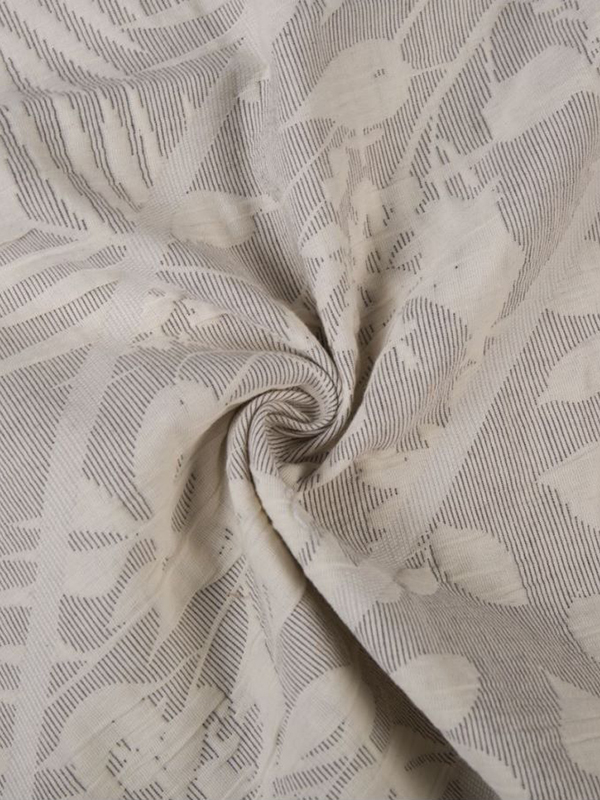
Su dirección de correo electrónico no será publicada. Los campos obligatorios están marcados *
 Teléfono: +86-13362131543
 Correo electrónico: [email protected]
Correo electrónico: [email protected]
 Dirección: No 3 Zhongyuan RD.,Zona industrial Shenshi Lianmeng,Ciudad de Xucun,Haining,Zhejiang,China
Derechos de autor © Zhejiang OSD Textile Co., Ltd.
